A professional handler can bring ring experience, time and practical organisation to a conformation campaign. The arrangement is still a partnership: the handler presents the dog, while the owner remains the person who authorises care, pays for agreed services and makes decisions about health and welfare. This guide is not a directory or an endorsement. It is a checklist for discussing the work before a dog travels, boards or enters a ring.
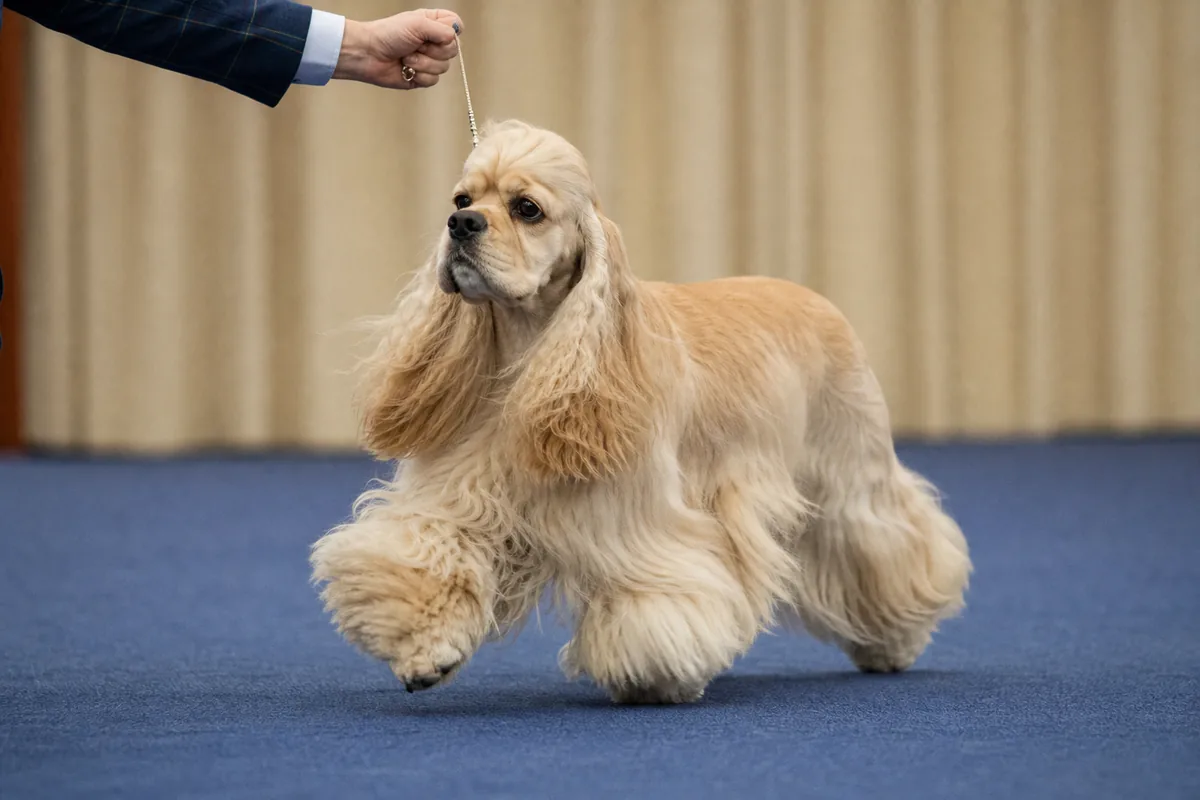
What the role actually covers
Depending on the agreement, a handler may evaluate a dog’s readiness, teach ring skills, condition the coat, enter shows, coordinate schedules, transport the dog, and present it to a judge. Some handlers work only at the show; others take a dog for a defined period and provide daily care, training, grooming and travel. Ask which of these services are included rather than assuming that “handling” means boarding or a complete campaign. The AKC’s overview of professional handling describes health, safety and welfare as foundational responsibilities, not optional extras.
For an American Cocker Spaniel, ring preparation should serve the breed’s structure and movement. The AKC Cocker Spaniel standard describes a sound, balanced sporting dog and a coat that is trimmed to show true lines rather than hide them. A handler’s job is to help a judge see the dog clearly, not to promise a particular placement or disguise a health, temperament or structural concern.
Who remains responsible?
Handing over a lead does not transfer ownership. The owner remains responsible for truthful health information, veterinary decisions, identification, insurance choices, entry authorisations and deciding whether the dog should continue. Give written consent for routine care, and specify who may approve urgent veterinary treatment, up to what limit, and how quickly you must be contacted. Share the dog’s records, medications, diet, allergies, triggers, emergency contacts and a recent photograph. Update the handler when anything changes.
Show rules also matter. Read the current rules and policies for the registry and event you plan to enter; the AKC rules hub links to conformation regulations and policies. An owner should verify eligibility, entries, deadlines and any restrictions rather than assuming the handler has authority to resolve every issue. A professional can advise and act as an agent where authorised, but cannot guarantee a judge’s decision, a title, a safe journey or a particular result.
Questions before you engage anyone
Have a conversation in person or by video before committing. Ask how many dogs are supervised by the handler and assistants, where dogs sleep, how often they are exercised, and what happens between rings. Ask about emergency veterinary access, medication logs, heat and cold precautions, separation of unfamiliar dogs, rest periods and cleaning. Ask who grooms, who drives, whether subcontractors are used, and how you will receive updates. A clear answer is more useful than a polished résumé.
Discuss your Cocker’s individual needs: handling tolerance, resource guarding, noise sensitivity, reactivity, age, fitness, previous injuries and the condition of the ears, skin, feet and coat. Ask for a realistic assessment of readiness and a plan for gradual acclimation. Request references you can contact, proof of relevant insurance where applicable, and the handler’s written rate schedule and client agreement. The AKC standard for handler professionalism is a useful conversation framework because it addresses supervision, facilities, food, medication, breed knowledge, communication and fair business practice.
Methods and welfare are non-negotiable
Training should teach the dog what to do: stand comfortably, accept a gentle examination, move on a loose lead, settle near activity and return attention to the handler. Look for short sessions, rewards, sensible management and the ability to stop when the dog is tired or worried. The AVSAB humane training position statement recommends reward-based methods and rejects aversive tools and punishment. Ask directly what equipment and corrections are used, and what behaviour would cause the dog to leave the ring or take a break.
Welfare is visible in the ordinary details: fresh water, appropriate food, clean bedding, safe temperature, quiet recovery time and competent observation. A dog that is panting continuously, shutting down, limping, persistently avoiding contact or developing diarrhoea needs care and a reassessment, not pressure to perform. Agree that the dog’s physical and emotional state outranks an entry, a photo or a ribbon.
Transport and boarding
Travel can be the largest part of a campaign. Put the itinerary, vehicle arrangements, stops, overnight locations and responsible person in writing. Ask how dogs are secured, ventilated and monitored, and how the handler manages heat, cold, delays and emergencies. Never accept vague assurances about a parked vehicle. Confirm microchip and collar details, an emergency contact who can reach the dog locally, and the destination veterinarian. Keep copies of vaccination and medication instructions with the dog.
If boarding is included, visit the facility or home setting before the stay. The AAHA boarding guidance recommends checking cleanliness and security, sharing medical and behavioural needs, and discussing veterinary care and vaccinations in advance. Ask how new dogs are introduced, whether dogs are ever left alone, how illness is isolated, and how exercise is adapted for weather or injury. A short trial stay can reveal whether the arrangement suits your individual dog, but it is not a substitute for ongoing communication.
Grooming and show preparation
American Cockers need a coat plan, not a last-minute makeover. Agree on bathing, drying, brushing, ear care, nails, feet, sanitary trim and the timing of each session. The standard calls for a natural-looking trim that preserves the dog’s outline and movement; the American Spaniel Club grooming education material treats show and everyday grooming as skills that can be learned and practised. Ask to see the work on a dog with a similar coat, and tell the handler what products or tools have caused irritation before.
Preparation also includes ring manners: accepting a judge’s hands, standing on a safe surface, moving at a comfortable pace and relaxing after the class. Do not allow a grooming or training schedule to conceal pain, skin disease, ear problems, excessive fatigue or fear. A veterinary examination is appropriate when movement, appetite, breathing, coat or behaviour changes.
Contracts and costs
Use a written agreement before the dog leaves home. It should identify the parties, dog, start and end dates, services, locations, show-entry authority, travel and boarding arrangements, grooming responsibilities, communication schedule, payment timing, reimbursable expenses, cancellation terms and what happens if the handler is ill or unavailable. Include a process for ending the arrangement and returning the dog, records and equipment. Clarify who receives prize money or reimbursements, without assuming that any award will occur.
There is no universal fee. Costs may be structured as a day or show fee, a period of care, travel expenses, grooming, entries, accommodation or other documented expenses. Request an itemised estimate and ask which costs can change. Never choose solely on a promised title or implied access to judges. A transparent agreement protects both sides and makes it easier to pause when the dog’s welfare or your budget changes.
Red flags and how to observe the relationship
Pause if someone refuses a written agreement, will not identify who handles or houses the dog, discourages veterinary care, hides the facility, uses intimidation, minimises injuries, guarantees wins, pressures you to surrender decision-making, or will not explain charges. Other warning signs include overcrowding, poor sanitation, dogs without water, unexplained weight or coat changes, repeated missed updates, and a dog that consistently freezes or avoids the person. One awkward moment is not a verdict; a repeated pattern without a plan is information.
Whenever possible, observe a normal training or grooming session, not only a successful ring appearance. Does the handler notice subtle stress, reward cooperation, allow breaks and adjust the plan? Does the dog choose to approach, recover after a mistake and move with a loose body? Can you ask a question without being shamed? A calm, respectful relationship is a better sign than theatrical control. Keep your own notes and trust specific observations over reputation.
Owner-handler alternatives
Professional help is optional. An owner can learn ring procedure through a local match, breed-club education, handling class or ringside observation, then practise in short sessions. A professional may provide a lesson, grooming demonstration, conditioning plan or occasional show-day assistance without taking the dog away. The AKC National Owner-Handled Series guidance explains eligibility and handler changes for that competition; always check the rules for your event. Owner-handling can strengthen communication, but it also requires honest assessment of time, skill, nerves and the dog’s comfort.
A handler who has only seen a dog work stock in a trial may not know what an instinct test actually records. It observes whether the dog shows sustained interest, balance and biddability around sheep, not whether it has been trained to move them. Novice handlers usually arrive with no prior exposure, so the test is read as a starting point, and the judge’s notes describe how the dog and the stock each respond. In the US, AKC, AHBA and ASCA issue different titles from that evaluation, which is why instinct testing versus trained work is worth separating before any training plan is built.
Frequently asked questions
Does hiring a professional mean my dog must live with them?
No. You can arrange a single lesson, show-day handling, grooming help, travel, or a defined stay. Specify exactly what is changing and for how long.
Can a handler guarantee a championship?
No. A handler controls preparation and presentation, not the judge, competition, eligibility or the dog’s health on a given day.
Should I send a dog that dislikes being touched?
Not without a gradual plan and veterinary or behaviour advice where needed. The dog must be able to participate without coercion; postponing is a responsible option.
How often should I receive updates?
Agree on a practical rhythm before the stay, plus immediate notice of illness, injury, medication changes, missed travel or a major behaviour change.
What should I bring?
Bring records, identification details, food, medications, written instructions, emergency contacts, familiar bedding and grooming or training information. Label everything.
Can I change my mind?
A contract should explain notice and return arrangements. If you are worried about safety or welfare, raise the concern promptly and seek veterinary help when appropriate.
Sources and further reading
This guide draws on current, directly relevant guidance: AKC Standard for Handler Professionalism; AKC Rules, Regulations & Policies; AKC Inside Look Into Professional Dog Handling; AKC Official Standard for the Cocker Spaniel; AKC National Owner-Handled Series Q&A; American Spaniel Club grooming education; AVSAB Humane Dog Training Position Statement; and AAHA boarding guidance. Rules, policies and veterinary advice can change; check the current source and consult your veterinarian for an individual dog.