← Back to the ownership learning plan
Kentucky offers bluegrass paths, wooded trails, ponds and long warm seasons, but an American Cocker Spaniel needs a plan for heat, humidity, ticks, sudden storms, wet ground and a long feathered coat. Build routines around the day’s conditions rather than the calendar alone. Verify rules with the county, city, park or land manager where you walk, and ask your veterinarian to adapt prevention to your dog. This is not a directory of breeders, kennels or businesses, and it does not replace professional advice.
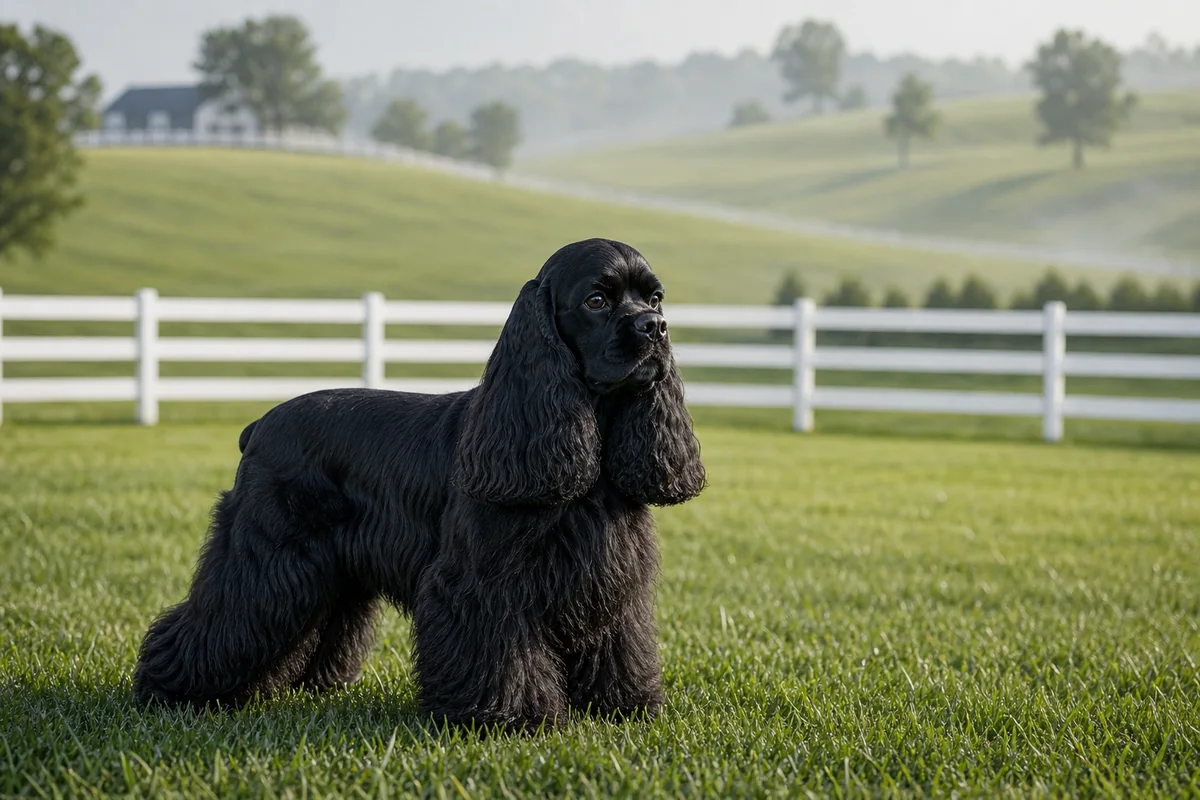
Heat and humidity: move the clock
Kentucky summer weather can make a familiar walk hazardous. The National Weather Service’s Louisville heat-safety guidance highlights the combined effect of heat and humidity and the need for shade, water and a cool indoor refuge. Plan active walks for the coolest available hours, check the forecast and humidity, and feel the surface with your hand before asking a dog to cross pavement. A Cocker’s enthusiasm can hide fatigue, so build in pauses rather than waiting for the dog to stop.
Heavy panting that does not settle, weakness, confusion, vomiting, unsteady movement or collapse is an emergency. Move the dog to a cooler place and contact a veterinarian or emergency service immediately. Never leave a dog in a parked vehicle, even for a short errand. On hot days, replace distance with scent work, food puzzles, short training sessions and calm indoor play. Ask your veterinarian how body condition, age, heart or airway health and medications alter heat risk for your dog.
Ticks and parasites: keep the boundary veterinary
Ticks can be encountered in grass, brush, wooded edges, yards and leaf litter, not only on remote hikes. The University of Kentucky’s extension guidance on the Lone Star tick describes exposure involving dogs and people and advises checking local conditions before using pesticides. After every outdoor outing, examine the ears, collar line, head, armpits, groin, toes and long feathering. Run your hands over the coat, remove attached ticks promptly with fine-tipped tweezers or a tick tool, and wash your hands.
Do not choose or combine flea, tick, heartworm or other parasite products from a generic list. Ask your veterinarian about active ingredients, age, weight, other pets, travel, health history and the parasites present where you live. Prevention does not remove all risk. Call promptly for fever, unusual fatigue, appetite loss, shifting lameness, swollen joints, persistent scratching or any sign that concerns you. Save the product label and record the date used so a clinician can make a safer assessment if a reaction occurs.
Storms, flooding and a ready emergency plan
Kentucky weather can change quickly through thunderstorms, tornadoes, flash flooding, ice or high winds. The National Weather Service’s pet-safety guidance recommends bringing pets indoors, keeping direct control during severe weather and planning for evacuation. Choose an interior safe place away from windows, practise moving there with a leash or carrier, and keep identification current. Never rely on a storm warning to find a missing tag, medication or transport plan.
Use the American Veterinary Medical Association evacuation-kit guidance as a checklist: food and water, medicines, records, proof of ownership, leash and collar or harness, bowls, waste bags, first-aid supplies, a secure carrier or restraint, flashlight, contacts and familiar bedding. Rotate supplies before they expire. List the regular veterinarian, nearest emergency hospital, animal control and an out-of-area contact. Identify more than one route and destination in case roads, bridges or shelters close. In an emergency, call a veterinarian for treatment instructions rather than improvising medication or first aid.
Trails, water and hidden plant hazards
“Pet-friendly” is not a universal permission. The Kentucky State Parks pet policy requires leashes in public areas and permitted trails, restricts pets from some nature-preserve trails and asks owners to check posted signs. The Kentucky Department of Fish and Wildlife FAQ describes additional leash conditions on wildlife-management areas, including seasonal restrictions and rules near water. Confirm the current policy for the exact trail, lake, wildlife area or campground; local rules can be narrower than a statewide summary.
Keep a Cocker close around cliffs, caves, fast water, fishing hooks, wildlife, hunting activity and unfamiliar dogs. Do not let the dog drink from stagnant, algae-covered or questionable water, and check current advisories before swimming. Rinse and dry the coat, feet and ears after water exposure. On grassy or overgrown routes, inspect for burrs, foxtails or other sharp plant material between toes, in feathering and around the ears. If a foreign body is painful, embedded or followed by swelling, stop probing and call a veterinarian.
Long coat, mud and outdoor grooming
The AKC Cocker Spaniel standard describes a silky coat with feathering on the ears, chest, abdomen and legs, and calls for trimming that keeps the dog’s true lines visible. For everyday life, that means a maintenance rhythm rather than a last-minute makeover. Brush and comb in sections, check behind ears and under legs, keep nails safely trimmed and make drying part of the return-home routine. A wet coat packed with mud can hide skin irritation and tangles.
Introduce tools, dryers, paw handling and ear checks gradually with rewards. Do not force a painful mat or shave close to the skin without a reasoned plan; ask an experienced groomer, and involve your veterinarian when skin, ears or pain are concerns. After winter walks, the American Animal Hospital Association’s winter guidance recommends wiping paws with a warm, damp cloth and checking for ice, salt and debris. Store ice melt securely and contact a veterinarian for possible ingestion or persistent paw irritation.
Evaluate local care professionals
Start with a short, specific brief: your dog’s age, coat, activity, behavior around handling, medical history and the situations you need help with. For a veterinarian, ask about office hours, emergency coverage, records, referrals, preventive care, dentistry, ear and skin problems, behavior support and how urgent calls are triaged. The AVMA’s pet-ownership guidance emphasises a veterinary partnership and timely care; visiting and asking practical questions before a crisis is sensible. Confirm an active Kentucky credential through the state’s licensing service, and keep copies of records.
For a trainer, ask what the dog will learn, which rewards and equipment are used, how stress is recognised and how the plan changes. The American Veterinary Society of Animal Behavior’s guidance recommends humane methods, continuing education, respectful teaching and observing a class. For a groomer, inspect sanitation, ventilation, secure tables, drying practices and the handling of anxious dogs. Choose professionals who explain limits, invite questions and refer medical concerns. Avoid guarantees, intimidation, physical force and any setting you cannot observe.
A dog’s working life is not limited to the field or the home. Herding instinct testing is a separate evaluation, and the reference page on instinct on stock explains what such a test measures, how novice handlers prepare, how dog and stock behaviour are read, and how AKC, AHBA and ASCA titles work in the United States. Kentucky owners who keep a Cocker Spaniel primarily as a companion may still find the material useful for understanding how instinct assessments differ from obedience or conformation events, and what a title does and does not certify about a dog.
Frequently asked questions
When should I exercise my Cocker Spaniel in Kentucky heat?
Choose cooler hours and shade, check current weather and surfaces, carry water, and shorten or move activity indoors when heat or humidity makes exertion unsafe.
Are ticks and parasites a seasonal concern in Kentucky?
Ticks and other parasites can remain a meaningful risk beyond one season. Ask your veterinarian for prevention suited to your dog, exposure and local conditions.
Can my dog swim in Kentucky lakes or rivers?
Only where access is permitted and conditions are safe. Check posted rules and water advisories, supervise closely, prevent drinking from questionable water and dry the ears and coat afterward.
How do I prepare for Kentucky severe weather?
Keep records, food, water, medication, identification, secure restraints and contacts ready, and plan an indoor safe place and evacuation route before storms arrive.
How do I evaluate a Kentucky veterinarian, trainer or groomer?
Check relevant credentials, visit the setting, ask how emergencies and methods are handled, and favour people who explain their approach and adjust it for this dog.
How should I manage a Cocker’s long coat outdoors?
Brush and inspect the feathering regularly, check for burrs and ticks after walks, dry the coat thoroughly and seek professional or veterinary help for painful mats or skin changes.
Sources and further reading
This guide draws on ten current official or professional sources: National Weather Service heat-safety guidance; University of Kentucky tick guidance; Kentucky State Parks pet policy; Kentucky Department of Fish and Wildlife public-land guidance; National Weather Service pet-safety guidance; AVMA disaster-preparedness guidance; the AVMA pet-ownership guidance; the AVSAB trainer-selection statement; the AKC Cocker Spaniel standard; and AAHA winter-walk guidance. Rules, forecasts and veterinary recommendations can change, so verify them before acting.